Infrared Material Guide Logo
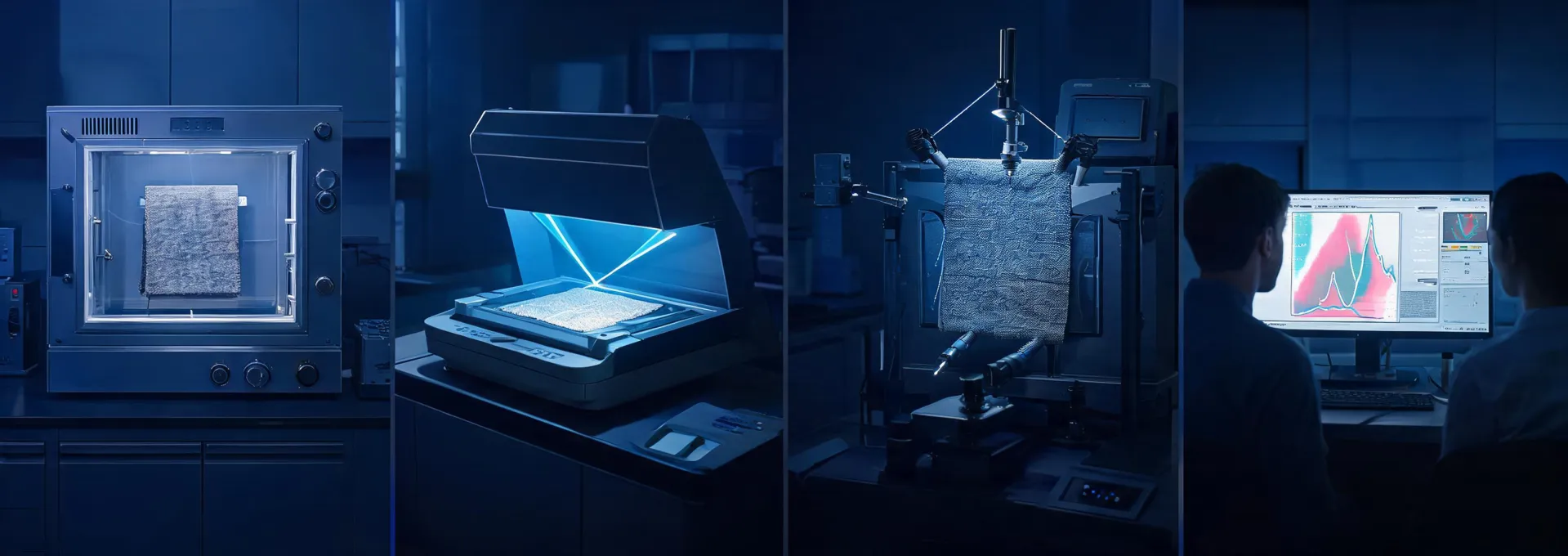
Infrared textile testing sequence

Textile standards and claim scope

Methods answer different questions

Presence, radiative behavior, physiological endpoints, mechanical properties, and regulatory wording are separate layers. A defensible material file identifies which layer each document supports and where it stops.

Claim-boundary worksheet

Record before citing a result

Material identity
Exact carrier, mineral incorporation route, prescribed loading, blend, yarn, fabric construction, finish, color, and layer position.
Test identity
Method title and version, laboratory or investigators, equipment, conditioning, temperature, wavelength, comparator, specimen count, and date.
Human-study identity
Population, sample size, inclusion criteria, anatomical site, exposure duration, endpoint, uncertainty, limitations, funding, and publication status.
Communication identity
Target jurisdiction, audience, product category, placement, exact sentence, and any required qualification or disclaimer.

Do not collapse these distinctions

Identity is not efficacy
Ash or XRF evidence may support ingredient presence. It does not by itself establish circulation, sleep, recovery, strength, pain, or a medical outcome.
Emission is not a universal human result
Infrared emissivity under a stated apparatus and temperature does not automatically establish an endpoint for every garment, bedding layer, or user.
One study is not every construction
A finding from a defined shirt, sock, glove, stocking, or other specimen remains linked to that setup and population.
General wellness is not treatment
CELLIANT wording about temporarily promoting increased local circulation at the site of application in healthy individuals must not become disease prevention, diagnosis, cure, or guaranteed recovery.

Evidence types and usable scope

Material identity

Ash analysis and XRF

These methods can help examine mineral content or elemental composition in a specified sample. The report should identify specimen preparation, basis for the prescribed amount, laboratory, method, result, and whether the exact production article was tested.

Physical behavior

Emissivity measurement

Record fabric temperature, wavelength range, instrument, comparator, sample conditioning, surface orientation, and calculation. Do not quote an official threshold as if every CELLIANT carrier or finished article automatically achieved it.

Human endpoint

TcPO2 and HSI

Transcutaneous oxygen pressure and hyperspectral imaging use different protocols and endpoints. Summaries must preserve population, anatomical site, timing, sample, control, minimum criteria, and study limitations.

Mechanical context

Care and construction testing

Dry rate, thermal behavior, UV, abrasion, wash, adhesion, dimensional stability, colorfastness, and textile construction are product-specific questions. A mineral ingredient does not determine every property of the finished fabric.

Regulatory boundary: The FDA has not approved or designated CELLIANT products for any purpose and has not determined or endorsed their stated use or benefits. The exact intended use, product construction, and market remain necessary to any compliance review.

SourceWho issued the document?
SpecimenWhat exact construction was tested?
MethodUnder which stated protocol?
BoundaryWhat does the evidence not establish?

Request the report that matches the route

For current CELLIANT specifications, prescribed loading, licensing, partner authorization, or official claim language, contact Hologenix through its official site. Use this independent guide to prepare the questions, not as a substitute for first-party documentation.

Visit the official CELLIANT site